Call Us: +91 9711992006, +91 7042241742, +91 9911225524


Have a Question about ! feel free to contact us for more information for planning your memorable trip to India.
Our vacation experts are at your disposal to convert your idea and blend it with our expertise to create great vacation for you.
 +91-9911225524




Upon arrival at Delhi International airport, you will be met by our representative at the exit gate. He will assist you in boarding the vehicle and transferring to the hotel.
DELHI, the capital of kingdoms and empires is now a sprawling metropolis with a fascinating blend of the past and the present. Delhi is a city that bridges two different worlds. Old Delhi, once the capital of Islamic India, is a labyrinth of narrow lanes lined with crumbling havelis and formidable mosques. In contrast, the imperial city of New Delhi, created by the British Raj, is composed of spacious, tree-lined avenues and imposing government buildings.
Delhi is a perfect introduction to the composite culture of an ancient land and a window to the kaleidoscope - that is India.
Overnight at hotel of stay.

After breakfast in the hotel, proceed for the sightseeing of Old Delhi. The tour will begin with a visit to Raj Ghat, a simple memorial to Mahatma Gandhi also known as the Father of the Nation; drive past the Red Fort (closed on Mondays),continuing by bicycle rickshaws to the Jama Masjid,one of Asia`s largest mosques. The magnificent Red Fort, overlooking the river Jamuna was built during the years 1638 - 48 when the Moghul Empire was at its peak.
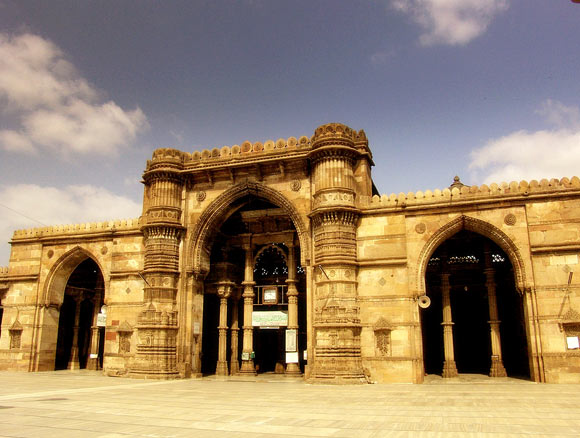
People stream in and out of the Jama Masjid continuously and the presence of a nearby bazaar means that the area is rarely quiet.
After visiting Old Delhi, you will be driven to New Delhi, which reflects the legacy the British left behind. The division between New and Old Delhi is the division between the capitals of the British and the Mughals respectively.
The tour of Delhi continues to Imperial Delhi which includes the Qutub Minar, the tallest stone tower in India. The tour also includes a drive past the imposing India Gate, the Parliament building, the Rashtrapathi Bhawan, the President`s residence & Humanyun`s tomb. If time permits, visit the Lotus temple located in south of Delhi. It is lotus shaped and has rightly been given the name. It is open to all faiths and is an ideal place for meditation and obtaining peace and tranquility.
Overnight at hotel of stay.

After breakfast drive to the pink city of Jaipur.
Jaipur is the state capital of Rajasthan and owes its name, planning and foundation to Maharaja Jai Singh II.
It is also know as the "Pink City", derived from the pink painted sandstone from which the buildings in the old walled city are constructed. This planned city presents great architectural elegance and beauty, historic and magnificent palaces, temples, gardens and museums.
Arrive Jaipur and check into the hotel.
Afternoon , proceed for sightseeing of the city.
The City Palace is a perfect blend of Rajasthani& Mughal architecture. The center of the palace is a seven-storied building called Chandra Palace, with fine views over the gardens & the city. A major part of the palace contains the Maharaja Sawai Mansingh II Museum.
After this proceed to theJantar Mantar (Solar Observatory), an astronomical treasure house, with solar devices that give accurate predictions till date. Continue for a photo shoot to the Hawa Maha or Palace of Winds, a five-storied structure of pink sandstone. It was built so that veiled royal women could peer down the busy street market unseen by the world through its 593 stone Jharokas (mini windows).
If time permits visit the Govind Devji Temple.
Overnight at hotel of stay.

After breakfast proceed for excursion to Amer Fort on the outskirts of Jaipur. Elephant ride ascent to the fort.
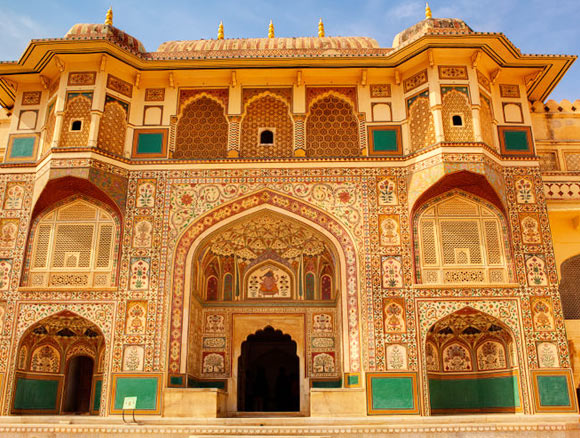
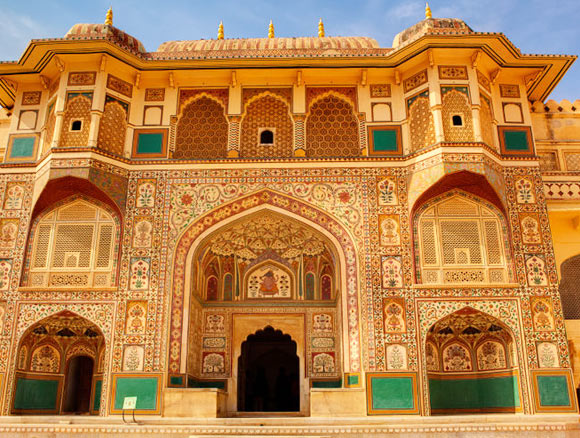
Amer is the classic romantic Rajasthani fort palace. Its forbidding exterior belies an inner paradise where a beautiful fusion of Mughal and Hindu styles finds it`s ultimate expression. Continue to drive to Jodhpur.
Arrive at Jodhpur and check into Hotel.
Overnight at hotel of stay.

After breakfast visit the Mehrangarh fort and Jaswant Thada before continuing to drive to Udaipur.
: Situated on a steep hill, Mehrangarh fort is one of the largest forts in India. The beauty and the grandeur of numerous palaces in the fort narrate a saga of hard sandstones yielding to the chisels of skilled Jodhpuri sculptors. Mehrangarh Fort, spreading over 5 km on a perpendicular hill and looking down 125 meters, presents a majestic view of the city horizon. This Fort is one of the best in India with its exquisitely latticed windows, carved panels, elaborately adorned windows and walls of Moti Mahal, Phool Mahal, and Sheesh Mahal. A collection of musical instruments, palanquins, royal costumes, furniture and the cannons on the fort`s ramparts are well preserved.
:Close to the fort complex, lies Jaswant Thada. This 19th century royal cenotaph built in white marble in commemoration of Maharaja Jaswant Singh II and three other cenotaphs stand nearby. The cenotaph of Maharaja Jaswant Singh holds the rare portraits of the rulers and Maharajas of Jodhpur. A visit inside the cenotaphs, with some villagers of the region, would bring forward the reverence they still hold for their brave kings.
After this continue to Ranakpur.
The Ranakpuremples, dating back to the 15th century have 200 pillars, none of which are alike, support its 29 halls. The Temple abounds with intricate friezes and sculptures. Includes visits to two more Jain temples and the Temple of the Sun God with its erotic sculptures.
Later on proceed to Udaipur.
The city of dawn, Udaipur, is a lovely city around the azure lake, hemmed in by the lush hills of the Aravallis. A vision in white drenched in romance and beauty, Udaipur is a fascinating blend of sights, sound and experiences and inspiration for the imagination of poets, painters and writers.Itis a kaleidoscope of fairy-tale palaces, lakes, temples, gardens and narrow lanes strewn with stalls, carry the flavour of a heroic past, epitomizing valour and chivalry. Their reflection in the placid waters of the Lake Pichola is an enticing sight.
Udaipur is the jewel of Mewar a kingdom ruled by the Sisodia dynasty for 1200 years.
Overnight at hotel of stay.

After breakfast, check out of the hotel and proceed to visit the City Palace.
Standing on the east bank of Lake Pichola, is a massive series of palaces built at different times from 1559 A.D. The balconies of the palace provide panoramic views of "Jag Niwas" (the world wide famous Lake P alace hotel), Jag Mandir on one side and on the other the city of Udaipur. Its main entrance is through the triple-arched gate - the Tripolia, built in 1725. The way now leads to a series of courtyards, overlapping parathions, terraces, corridors and gardens - a harmonic profusion hard to describe. There is a Suraj Gokhda, where the maharanas of Mewar presented themselves in times of trouble to the people to restore confidence. The Mor-chowk (Peacock courtyard), gets its name from the vivid mosaics in glass decorating its walls. The chinichitrashala is noteworthy while a series of wall paintings of Krishna are on display in Bhim Vilas. There are numerous other palaces such as Dilkhush Mahal, Sheesh Mahal, Moti Mahal and Krishna vilas - in memory of a princess of striking beauty who poisoned herself to avert a bloody battle for her hand by rival princes`. Here you will marvel at rooms with mirrored walls and ivory doors, coloured glass windows and inlaid marble balconies and the Peacock Courtyard.
After the visit, transfer to the airport to connect your flight to Mumbai.
Arrive at Mumbai and transfer to the hotel.
Overnight at hotel of stay.

Early in the morning, check out of the hotel and transfer to the airport to connect your flight to Aurangabad.
Aurangabad is named after the Mughal emperor, Aurangazed, whose tomb is found here at Khuldabad. The city is a very busy tourism hub, surrounded by a number of historical monuments, especially the World Heritage sites of Ajanta and Ellora,
On arrival at the airport, proceed to the hotel for a check in.
After breakfast and wash & change begin your sightseeing with a full day excursion to the Ajanta Caves, 105 kms away.
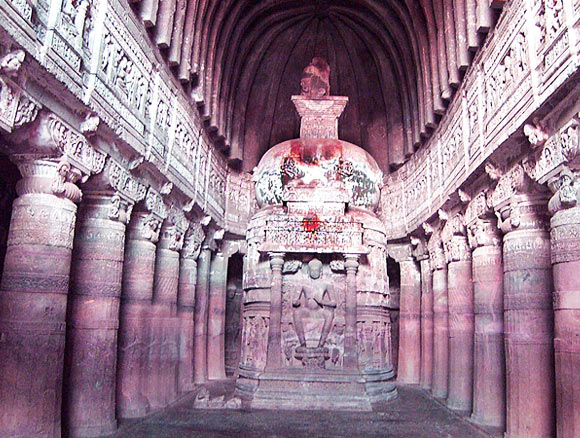
Ajanta is world`s greatest historical monument recognised by UNESCO. There are 30 caves in Ajanta of which 9, 10, 19, 26 and 29 are chaitya-grihas (prayer hall with a stupa) and the rest are monasteries. These caves were discovered in 1819 and were built from the 2nd century BC continuing till the 5th century AD. The caves of Ajanata are famous for their paintings. Most of the paintings are from 2nd century BC and some of them about the fifth century AD and continued for the next two centuries. All paintings show heavy religious influence and centre around Buddha, Bodhisattvas, incidents from the life of Buddha and the Jatakas. The paintings are executed on a ground of mud-plaster in the tempera technique.
Return to the hotel in the evening.
Overnight at hotel of stay

After an early breakfast, proceed for an excursion to Daulatabad Fort and Ellora Caves, 30 kms away.
The Daulatabad fort is situated on an isolated cone-shaped hill rising abruptly from the plain to the height of about 190 metres. The fortification constitutes of three concentric lines of defensive walls with large number of bastions. The noteworthy features of the fort are the moat, the scarp and the sub-terranean passage, all hewn of solid rock. The upper outlet of the passage was filled with an iron grating, on which a large fire could be used to prevent the progress of the enemy. The Chand Minar, the Chini Mahal and the Baradari are the important structures within the fort.
After visiting the Daulatabad Fort, continue to the Ellora Caves.
Ellora is a site of outstanding caves, dated between 575 AD and the end of the 9th century. The caves were excavated from volcanic rocks along a 2 km stretch of west facing embankment. There are 34 major caves, numbered consecutively rather than chronologically, starting with the Buddhist group (caves 1-13) in the south. Other groups are dedicated to the Brahmanical pantheon (caves 14-29 and to Jainism (30-34).The most notable and awe inspiring is cave 16, the Kailasa Temple, which represents the culmination of rock cut architecture, with huge sculptural reliefs heightening the overall symbolism of the temple as cosmic mountain and as the home of Lord Shiva.
After this visit, if time permits, see the Bibi ka Maqbara and the Panchakki before continuing to the airport to connect your flight back to Mumbai.
Arrive Mumbai and transfer to the hotel
Overnight at hotel of stay.

In the morning,after breakfast, take a boat across the harbour and visit the Elephanta caves.
Across the Mumbai harbour, lie the seventh-century rock-cut temples of Elephanta. Once known as Gharapuri, or the Fortress City, the Caves are now designated as a World Heritage Site. The painstakingly hewn rock cut temples are dedicated to Lord Shiva. The Portuguese renamed this island Elephanta after a large stone elephant found near the shore.
While going to Elephanta Caves you will board the boat at the Gateway of India,Mumbai`s most striking monument. It has an imposing gateway arch in the Indo-Saracenic style with Gujarati and Islamic elements such as wooden carvings. It was built to commemorate the visit of King George V and Queen Mary to India in 1911.
On return from the Elephanta Caves proceed for a drive past:
Chhatrapati Shivaji Terminus (Victoria Terminus) :This is a magnificent building, and considered to be architecturally one of the finest stations in the world. Built by the British in 1888, it has exquisite ornamentation on its facade along with beautifully executed panels and friezes. It holds the statue of Queen Victoria on its dome.
National Gallery of Modern Art: This is the former Cowasji Jehangir Hall, of the Institute of Science. It has been renovated to serve as a four-storey exhibition hall, displaying the best of Indian contemporary art.
Overnight at hotel of stay.

After breakfast, transfer to the airport to connect your flight to Kochi
Arrive in Kochi and transfer to the airport.
Heralded as the Queen of the Arabian Sea, Kochi was an important spice trading centre on the west coast of India from the 14th century. Occupied by the Portuguese Empire in 1503, Kochi was the first of the European colonies incolonial India. It remained the main seat of Portuguese India until 1530. The city was later occupied by the Dutch and the British, with the Kingdom of Cochin becoming a princely state.
In the afternoon proceed for a sightseeing tour of the city.
Visit the Dutch (Mattancherry) Palace, Jewish Synagogue, JewTown, St.Francis church, Chinese fishing net & The indo-Portuguese Museum.
Mattancherry Palace: The Mattancherry Palace is a Portuguese palace popularly known as the Dutch Palace. It features Kerala murals depicting Hindu temple art, portraits and exhibits of the Rajas of Kochi.
Jewish Synagogue :The world-renowned Jewish Synagogue, first built in 1568 and reconstructed in part and enlarged over the years, can be found in the Mattancherry area of Kochi. The road that it was built on came to be known as Jew Street or Synagogue Lane, and the surrounding neighborhood as Jew Town.The synagogue is, today, the only functioning one in Kerala. The diverse influx of Jews to Mattancherry led to its designation as the Paradesi, or Foreigners Synagogue.
Church of St. Francis : St. Francis Church, in Fort Kochi originally built in 1503, is the oldest European church in India and has great historical significance as a mute witness to the European colonial struggle in the subcontinent.
Chinese Fishing Nets : Chinese fishing nets (Cheenavala) are fishing nets that are fixed land installations for fishing. Huge mechanical contrivances hold out horizontal nets of 20 m or more across. Each structure is at least 10 m high and comprises a cantilever with an outstretched net suspended over the sea and large stones suspended from ropes as counterweights at the other end. Each installation is operated by a team of up to six fishermen.
Overnight at hotel of stay.

In the morning, after breakfast, continue your tour by driving to Thekkady.
The very sound of the word Thekkady conjures up images of elephants, unending chains of hills and spice-scented plantations. In the Periyar forest of Thekkady, is one of the finest wildlife reserves in India and spread across the entire district are picturesque plantations and hill towns that hold great apportunities for treks and mountain walks.
On arrival proceed to the hotel for a check in.
Later in the day proceed for a visit to the Periyar Wildlife Sanctuary.
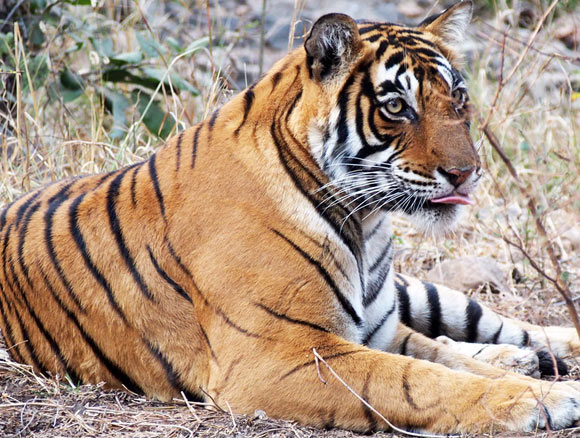
Lying close to the plantations, in the rich jungles of Periyar, is one of the world`s most fascinating natural wildlife reserves - the Periyar Wildlife Sanctuary. Spread across 777 sq.km, of which 360 sq.km is thick evergreen forest, the Periyar Wildlife Sanctuary was declared a Tiger Reserve in 1978.The splendid artificial lake formed by the Mullaperiyar Dam across the Periyar adds to the charm of the park. This is the only sanctuary in India where you can have the unique experience of viewing wildlife at close quarters from the safety of a boat on the lake. The greatest attraction of Periyar, however, are the herds of wild elephants that come down to play in the lake.
In the evening you can visit Kumilly and buy spices in the spice market there.
Overnight at hotel of stay.

This morning, after breakfast, drive on to the temple town of Madurai.
Madurai has a rich historical background in the sense that Lord Shiva himself performed sixty-four wonders called "Thiruvilaiyadals".
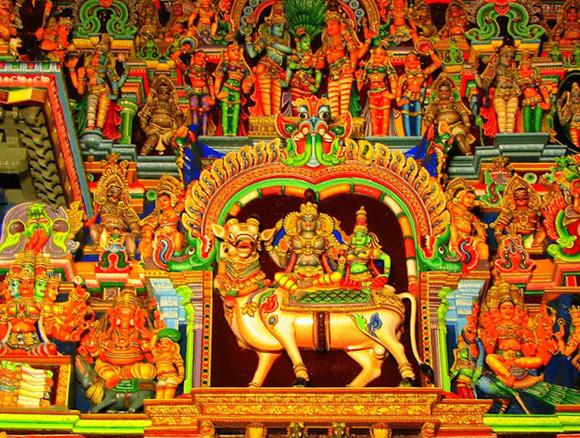
Synonymous with Madurai is the Meenakshi Sundareswarar twin Temple, the pivot around which the city has evolved. The Meenakshi Temple complex is literally a city - one of the largest of its kind in India and undoubtedly one of the oldest too. The temple grew with the contribution of each dynasty and victorious monarchs, into an enormous complex extending over an area of 65000 Sq m. The temple first came in to being 2000 years ago and was substantially expanded during the regime of ThirumalaiNayak(1623-55 AD).
Lord Siva in his incarnation as Sundareswarar and his fish-eyed spouse, Meenakshi, are enshrined in this twin temple. There are four massive gateways enclosing these two shrines. Even a casual visitor is fascinated by the many paintings and sculptures.
A striking feature of the temple is the astonishing structure know as AyiramkaalMandapam or the Hall of Thousand Pillars and each pillar features high, ornate, bold sculptures that look life like. View from any angle these pillars appear to be in a straight line, an architectural masterpiece indeed In the outermost corridors are situated the matchless musical pillars carved out of stones. When it is tapped, each pillar produces different musical note.
On arrival check into the hotel and then proceed to visit the temple complex. Also visit the ThirumalaiNayak Palace.
After the visits return to the hotel . Rest of the evening is at leisure for independent activities.
Overnight at hotel of stay.

In the morning, after breakfast, transfer to the airport to connect your flight to Chennai.
Chennai, the capital of Tamil Nadu, located on the Coromondel coast, off the Bay of Bengal, is the biggest commercial & industrial centre in South India. It is also a major cultural and educational centre. Since there are a lot of automobile industries in and around the city, Chennai is often referred to as the Detroit of India.
After arriving at the airport, proceed to the hotel for a check in. Later continue for a sightseeing and orientation tour of the city.
Visit the Marina Beach, Fort Museum, San Thome Church and the Kapeeleshwar Temple.
: The 13-kilometre long Marina Beach forms the city`s east coast, from Fort St. George all the way to Mahabalipuram and is one of the longest beaches in the world.
: St Thomas built a church at San Thome. After his martyrdom, his body was buried in the Church built by him. A pot containing earth, moistened by his blood and the lance with which he was pierced were both buried in his tomb.
Kapaleeshwar Temple : The Mylai Kapaleeshwarar Thirukoil, commonly known as the Kapaleeshwar koil is one of the very ancient temples of India. This landmark temple situated near the shores of the sea in Mylapore. The primary deities worshipped here are Lord Kapaleeshwarar and goddess Karpagambal.
: The Fort St. George Museum began with a small collection of objects of the British Raj donated by the then Madras Presidency Government, the St. Mary`s Church authorities, the disbanded army units and others. Over the years many objects were acquired by various means and there are now 3661 registered antiquities in the collection. Best among them (602) are on display in ten galleries.
After sightseeing you can visit the markets and buy the silks,jewellery and handicrafts that Chennai is known for.
Return to the hotel
Overnight in the hotel of stay

After breakfast in the hotel, transfer to the airport to connect your flight to Bhubaneshwar.
On arrival transfer to the hotel.
Bhubaneswar, the capital of Orissa, is also popularly known as the "Temple City of India". Being the seat of Tribhubaneswar or `Lord Lingaraj`, Bhubaneswar is an important Hindu pilgrimage centre. Hundreds of temples dot the landscape of the Old Town, which once boasted of more than 2000 temples. Bhubaneswar is the place where temple building activities of Orissan style flowered from its very inception to its fullest culmination extending over a period of over one thousand years.
On your sightseeing tour, visit the Lingaraja Temple, Mukteshwara Temple and the Rajarani Temple.
Bhubaneshwar is a shoppers delight for silver filigree work, tie and dye fabrics and patta paintings.
After sightseeing return to the hotel
Overnight at hotel of stay.

After breakfast drive to Puri visiting the Sun Temple at Konark enroute.
The magnificent Sun Temple at Konark is the culmination of Orissan temple architecture, and one of the most stunning monuments of religious architecture in the world. The poet Rabindranath Tagore said of Konark that `here the language of stone surpasses the language of man`, and it is true that the experience of Konark is impossible to translate into words.
The massive structure, now in ruins, sits in solitary splendour surrounded by drifting sand. Today it is located two kilometers from the sea, but originally the ocean came almost up to its base. Until fairly recent times, in fact, the temple was close enough to the shore to be used as a navigational point by European sailors, who referred to it as the `Black Pagoda`.
After Konark continue to the seaside resort of Puri.
Overnight at hotel of stay.

The full day is at leisure
You can visit the beach and the famous Jagannath Temple. The temple is not open to non Hindus, however, the building and the courtyards can be seen from a platform close by.
Overnight in hotel of stay.

Early in the morning check out of the hotel and travel to Bhubaneshwar airport to connect your flight to Delhi
Arrive at Delhi and continue by road to Agra a journey of 4 hours by road.
Arrive at Agra in the evening and proceed to your hotel for a check in.
Overnight at hotel of stay

After breakfast, proceed to visit the Taj Mahal and Agra Fort
The golden age of the city began with the great Mughal emperor, Akbar. It was the capital of the Mughal emperors, Akbar, Jehangir and Shah Jahan. Shah Jahan, later, shifted his capital to Delhi
. The Agra fort was, designed and built by Akbar in 1565 A.D. Built with red sandstone, it houses the beautiful Pearl Mosque and numerous palaces including the Jahangir Mahal, Diwan-i-Khas, Diwan-i-Am.
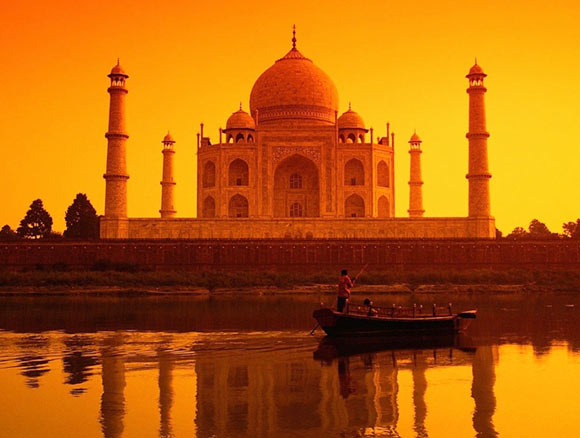
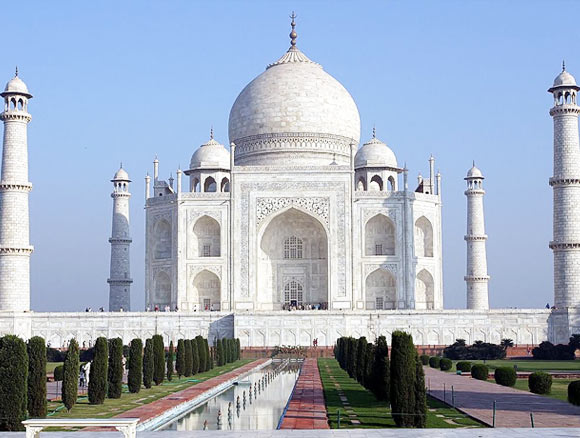
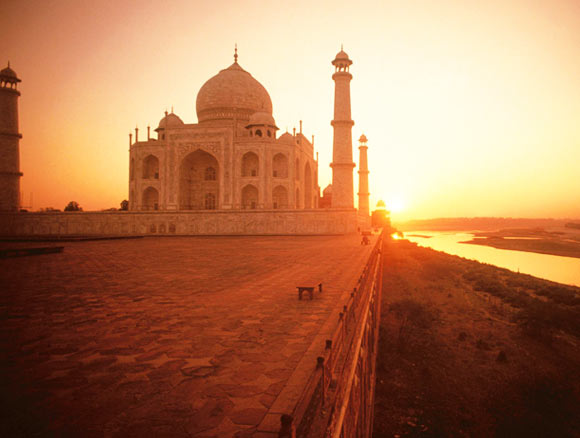
Then proceed to visit the Taj Mahal- the jewel of Muslim art in India was built by Shah Jahan in memory of his beloved wife, Mumtaz Mahal (monument closed on Fridays). Built in white marble, this monument is a fine example of the fusion of many architectural styles- a style that combines elements from Islamic, Persian, Turkish and Indian architectural styles.
In the afternoon continue to Fatehpur Sikri (37 kms from Agra).
Old deserted town of Mughal Dynasty, Fatehpur Sikri was built in red sandstone in honour of Saint Salim Chisti who foretold the birth of sons to Emperor Akbar. It is an example of robust stability combined with originality. Each important edifice here represents a type by itself. Notable among them is the Diwan-e-Khas, which is a tall vaulted room with an intricately carved central pillar and capital supporting a platform that once held the emperor`s throne. The airy Panch Mahal, a 5 storied structure rising in pyramidal fashion, was probably used by the ladies of the court. Set like a jewel in a courtyard of pink sandstone is the finest building here, the marble tomb of Salim Chisti enclosed by finely carved, lacy marble screens. The Buland Darwaza, an imposing gateway 54 m high, was built to commemorate Emperor Akbar`s victory in Gujarat
After visiting Fatehpur Sikri,return to Agra for the night.
Overnight at hotel of stay.

In the morning, checkout of the hotel after breakfast and transfer to the railway station to connect the Shatabdi Express to Jhansi.
Board Shatabdiat 0815 hours
Disembark at Jhansi at 1020 hours
On arrival at Jhansi Railway Station you will be met by our representative who will assist you in boarding the vehicle for your drive to Khajuraho. Enroute visit Orchha.
Orchha A medieval city founded by Bundela rulers with Palaces and temples of the 16th and 17th century which have remarkably withstood the onslaught of time. The city is picturesquely flanked by the River Betwa.
Proceed for sightseeing of Orchha sites within the Fort Complex. Lunch will be at Orchha and then proceed to Khajuraho.
Situated in the northern most part of Madhya Pradesh, Khajuraho is famous for its enchanting temples and its legendary Khajuraho dance festival. The name Khajuraho is derived from the Khajur tree (the date palm tree) which is grown abundantly in the region. The Khajuraho Temples are dedicated to a celebration of womanhood, her myriad moods and facets. Famous for its erotic architecture, the carvings include, women writing a letter, applying eye makeup, combing her tresses, dancing & playing with her child. Her innocent, blushing, charming, seductive, ardent beauty, all depicted in exquisitely sculptured details. These temples have been designed and carved to lead the eyes from ground level upward till you seem to be looking at heaven.
Arrive Khajuraho and check in at hotel.Overnight at hotel of stay.

Morning proceed for a tour of the famous Western & Eastern temples in Khajuraho. Primarily built in one style the temples have the ardha mandapa or the entrance, the mandapa or the assembly hall, the antarala or the vestibule and finally a pradakshina or a circumambulation running around the grabha griha or the inner sanctum. The temples are divided in three major zones, the western, the eastern and the southern temples of which the western temples are the most popular ones.
The arch of Kandariya Mahadeva shrine has meticulously carved various themes of life. Celestial beings, lovers serenading musicians all the movements captured in stone, frozen in time, yet retaining a quality of warm, pulsating life. The very stone seems to have taken on the living, breathing quality of the carved figures. Outer walls have three horizontal panels showing deities of the Hindu pantheon, and groups of lovers, a pageant of sensuousness, vibrantly alive. Another interesting temple is dedicated to the Sun God, the Chitragupta temple. It shows the Sun God driving the chariot drawn by seven horses. The exteriors show royal processions, elephant-fights, hunting scenes, group dances and the lavish lifestyle of the Chandela kings and their court in its all pomp and glory
Later drive back to hotel.Overnight at hotel of stay.

Morning transfer to airport to board flight for Varanasi
Arrive Varanasi, picturesquely situated on the crescent shaped left bank of the holy River Ganges.
Varanasi, one of the ancient seats of learning in India, is said to be a compound of the names of two streams, the Varuna and the Assi, which still flow in the north and south of the city respectively. Varanasi is probably one of the most ancient living cities in India. From time immemorial it has been a great religious center for Hindus and one of their most sacred places of pilgrimage, being visited by millions of people every year. To every visitor Varanasi offers a breathtaking experience. The rays of the dawn shimmering across the Ganges; the high-banks; the temples and shrines along the banks bathed in a golden hue soul stirring hymns and mantras along with the fragrance of incense filling the airand the refreshing dip in the holy waters gently splashing at the Ghats. Varanasi The land where experience and discovery reach the ultimate bliss.
Enjoy the evening Aarti at the Ghats. The guide will be giving a commentary to you on the proceedings and meanings of the chants during the Aarti of the river. Spend the evening shopping in the lanes of Varanasi.
Overnight at hotel of stay.

Morning drive to Dasashwamedh Ghat and take a boat ride on the sacred river Ganges to see the cremation Ghats and witness the living traditions of one of the world`s oldest and most important religions. (To start at 0500 hrs. for the best lifetime experience)
For you to appreciate this remarkable city, we shall transfer you to the banks of the River Ganges before the sun rises. Board a boat with your guide and proceed to the middle of the river, where at sunrise the sight unfolds before you. Thousands of faithful come daily to the banks to bathe and pray while in the background, temples and palaces rise in tiers from the waters edge. Then return for a walk through the cobblestone streets along the banks of "Ganga". As shops are opening, the place now becomes a beehive of activity as the faithful are coming and going. Visit the Kashi Vishwanath Temple while returning to the hotel.
Drive back to hotel. After a leisurely breakfast, proceed for a city tour of Varanasi including the Bharat Mata Temple, which features a big relief map of Mother India, engraved in marble. Also visit the 18th century Durga Temple, commonly known as the Monkey Temple due to the huge population of monkeys. Proceed to the Tulsi Manas Temple, crafted from white marble which features the entire history inscribed on its walls. Also visit the Benaras Hindu University campus considered as the biggest residential university in Asia. The University Campus houses an Art Gallery and the Mosque of Mughal Emperor Aurangzeb.
Afternoon visit Sarnath 11 kms out of Varanasi is one of the holiest Buddhist sites in the world, where Buddha preached his first Sermon in 590 BC. Here he revealed the eight fold path that leads to the attainment of inner peace, Enlightenment and Ultimate Nirvana. Witness the ruins of a once flourishing Buddhist monastery and then visit a fine Museum which houses an excellent collection of Buddhist art and sculptures found at the site.
Overnight at hotel of stay.

In the morning, after breakfast, transfer to the airport to connect your flight to Delhi.
On arrival transfer to the International airport to connect flight for your onward journey bidding a fond farewell to India and moving on with pleasant memories!!
End of Tour.
Lydia and I had a wonderful time in India, thanks to all the arrangements made by you and MYSHA. The trip accomplished everything that we wanted to see in this short time. We were very impressed by your team's professional, courtesy and timeliness. Your staff was there at every level and every occasion from the time we arrived in Delhi to the time we left India. They were there at every hotel and venue to ensure that everything was properly taken care of. Any issue we encountered was promptly handled and resolved. Your staff was always available on the phone and you giving us a local phone was excellent and made us very comfortable.
Passport Validity
|
Exclusive South India
<p>On this tour, visit the states of Tamil Nadu and Kerala, land of culture and temples. Tamil Nadu is the cradle of Indian temple architecture and is a living museum of styles that originated in the 7th century and matured in the huge temple complexes and towns framed by the huge gateways or “gopurams”.<br />
The marvel called Kerala is popularly known as “God’s Own Country”! Kerala has history & culture, tea gardens, beaches and backwaters. The timeless beauty of the palm fringed beaches of Kovalam, the hills and tea gardens of Munnar, the serene and pristine backwaters of Kumarakom and the enchanting woods, forests and spice plantations of Thekkady have been wowing tourists from all over for a very long time.</p>Read More |
Heritage Gujarat Tour
<p>Gujarat, on the western coast of India, is one of the most industrialized states of the country. Apart from industry, Gujarat also has a rich historical tradition and cultural heritage. It is now one of the most popular tourist destinations in India and is a land of romance, vibrant colours and natural beauty.</p>Read More |